
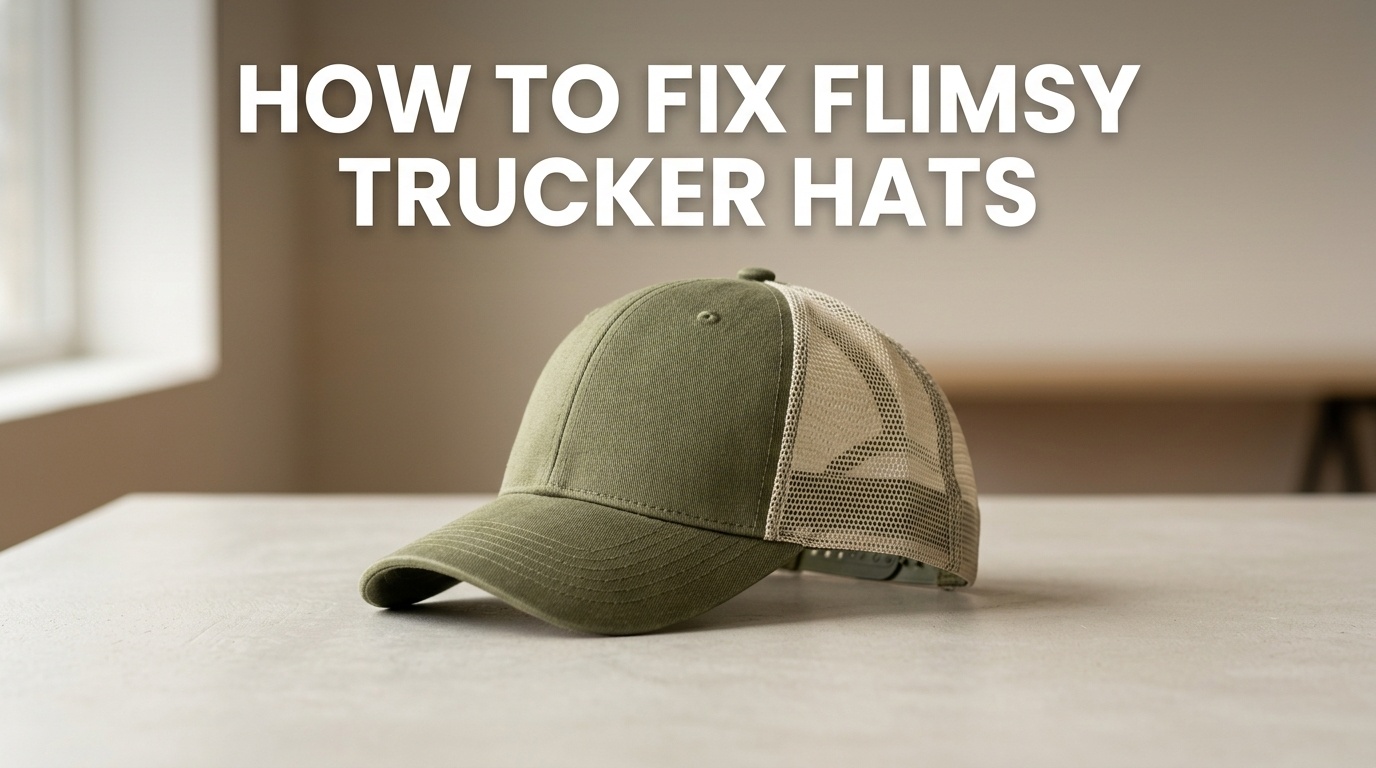
Trucker hats are a staple in many apparel lines, favored for their casual style and versatile branding potential. However, a common challenge faced by wholesale buyers and brands alike is dealing with flimsy or poorly constructed trucker hats that lose shape over time, diminish perceived quality, and diminish brand value. To meet consumer expectations and uphold product standards, understanding how to effectively fix and reinforce flimsy trucker hats becomes essential. This guide offers professional insights and practical solutions tailored to wholesale operations seeking to enhance product durability, improve customer satisfaction, and strengthen brand reputation.
Understanding the Core Causes of Flimsiness in Trucker Hats
Material Selection and Fabric Quality
One of the primary contributors to a hat’s structural integrity is the fabric used in both the crown and the mesh panels. Lower-quality fabrics tend to be less stiff and more prone to sagging, especially after repeated washes or prolonged wear. Typically, inexpensive polyester blends or inferior mesh fabrics can lead to a flimsy feel, compromising the hat’s shape and durability.
Construction Techniques and Stitching
Another critical factor is the construction method. Inadequate reinforcement at stress points—such as the crown, brim, or seams—can cause the hat to lose its form. Weak stitching, uneven seams, or missing reinforcements are common culprits for a floppy, shapeless trucker hat. Proper seam tension, bar-tacking at stress areas, and reinforced eyelets are key to maintaining shape integrity.
Bill and Crown Reinforcements
The bill’s stiffness heavily depends on internal reinforcement, such as plastic or cardboard inserts, and the fabric covering. Without proper reinforcement, the bill can flop or bend excessively, diminishing the hat’s professional appearance. Similarly, the crown’s internal structure must support head shape without becoming overly flimsy or collapsing.
Professional Solutions for Reinforcing and Fixing Flimsy Trucker Hats
Adding Internal Reinforcements
- Using Fusible Interfacing: Applying lightweight or medium-weight fusible interfacing to the inside of the crown or bill adds rigidity. This process involves cutting the interfacing to size, then ironing it onto the fabric using a heat press or household iron, ensuring a smooth, durable bond.
- Inserting Cardboard or Plastic Stiffeners: For immediate shape retention, insert a pre-cut cardboard, plastic, or thermoformed insert into the bill. Ensure it is slightly smaller than the bill’s dimensions to prevent distortion, and secure it with adhesive or sewing if necessary.
Reinforcing Seams and Stress Points
- Double Stitching: Reinforce critical seams such as the crown seams, side panels, and the brim attachment with double or triple stitching, which enhances durability and maintains shape over time.
- Bar-Tacking: Apply bar-tacking at stress points like the eyelets, eyelet reinforcements, or where the sweatband connects to the crown to prevent tearing and elongation.
Upgrading Fabric and Material Quality
- Choosing Higher-Quality Mesh and Fabric: Switch to sturdy yet breathable mesh fabrics with a firm hand-feel. Consider using polyester-cotton blends or specialized performance fabrics designed for shape retention.
- Opting for Stiff Brim Materials: Select pre-manufactured brims with built-in plastic or thermoformed stiffeners, which ring true to brand quality standards and customer expectations.
Employing Professional Heat or Forming Techniques
Using heat presses or specialized hat-blocking machines allows brands to pre-form the hat’s crown and brim to precise shapes. This process ensures consistent, professional shape retention, especially when manufacturing at scale. Consolidating the shaping process early leads to more durable, less flimsy end-products.
Implementing Quality Control and Inspection Procedures
Pre-Production Testing
Establish testing protocols for fabric stiffness, stitch strength, and overall construction before committing to large shipments. Conduct stress tests and shape retention trials to identify potential weak points early in the production cycle.
Post-Production Inspection
Implement visual inspections and handling tests to ensure each hat maintains its shape and strength. Regular quality checks can catch early signs of flimsiness, enabling corrective action before distribution.
Design Strategies to Reduce Flimsiness in Future Production
Specification Setting
Work closely with manufacturers to specify high-quality materials, reinforcement techniques, and construction standards. Clear communication on expectations ensures that all supply chain partners adhere to quality benchmarks.
Innovation in Structural Design
Incorporate innovative design elements such as internal reinforcements, layered fabrics, and structural inserts. These features improve durability while maintaining the lightweight and breathable properties essential for trucker hats.
Partner with the Experts
In the competitive wholesale market, product quality directly impacts brand reputation and customer satisfaction. By applying these professional techniques for reinforcing and fixing flimsy trucker hats, brands can significantly enhance their product offering. Professional manufacturing facilities that adhere to strict standards and utilize advanced reinforcement processes are key to scaling your success.
Partner with the experts at customhatsgolf.com. Our low MOQ of 100 units, low international shipping costs, 7+ years of experience in custom hat manufacturing, and ISO 9001:2015 certification ensure you receive high-quality, durable trucker hats designed to withstand the rigors of everyday wear while strengthening your brand identity.